
Property information: what do the records say?
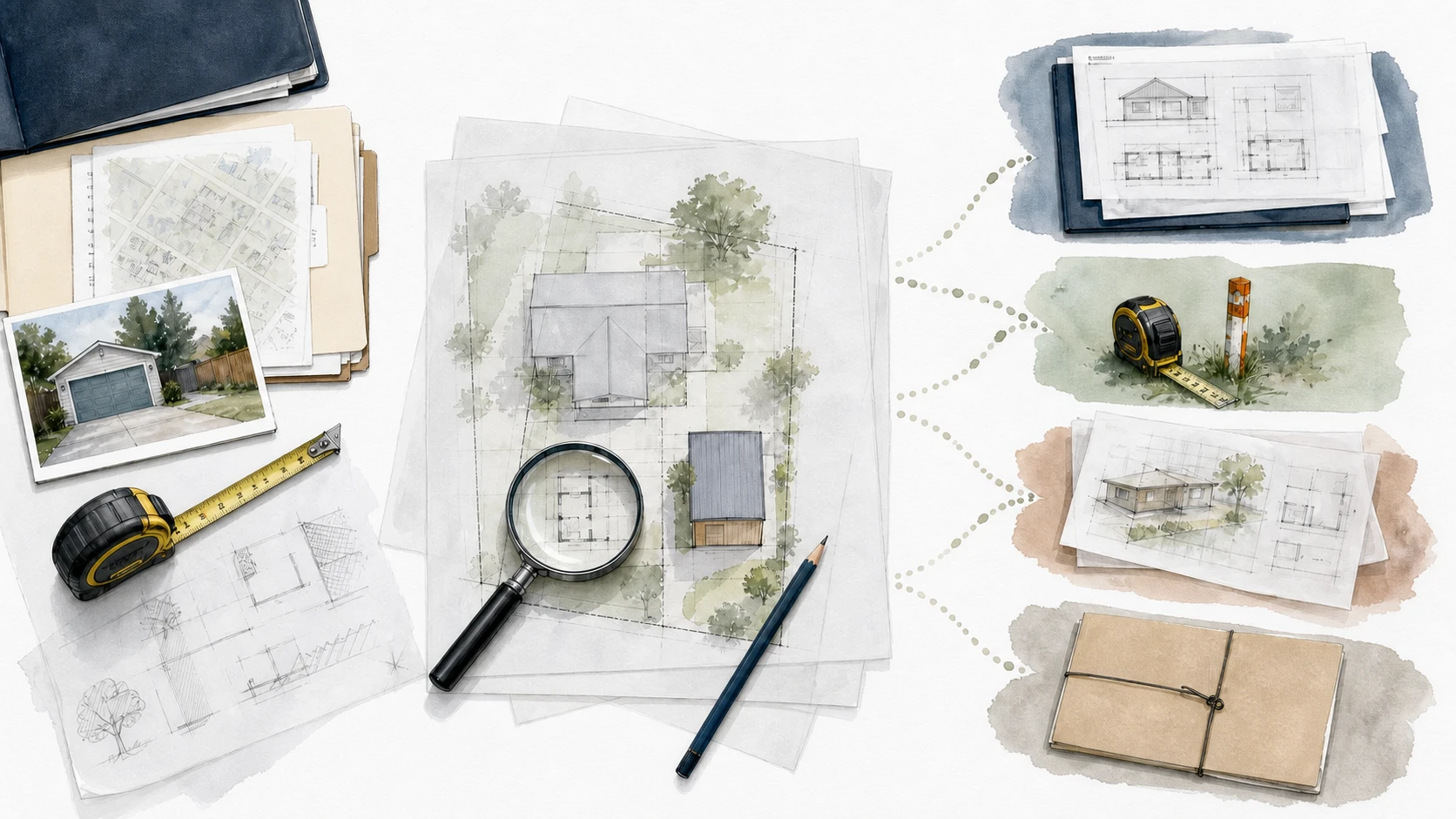
Start here if your information is scattered across assessor records, zoning maps, permit searches, and old paperwork. A property-information review gathers useful online records for one address and explains where each finding came from. Studio Bluework includes this research in the Design Feasibility Review.
Missing records and conflicting details belong in the report too. But collecting records is not the same as checking an ADU idea. A map or permit reference cannot tell you everything about what is actually on the property.
- Source-linked property and reviewing-agency summary
- Relevant online maps and record references
- Clear notes about missing or conflicting information
- Where to look for missing information
- No conclusion about whether an ADU will work
ADU review: what should you check before going further?
An ADU review starts with one property and one idea, such as a new one-bedroom unit in the backyard or a garage conversion. That gives the review something specific to address: the records, visible site conditions, access, utility questions, and information an engineer or another specialist may need.
At Studio Bluework, the Design Feasibility Review includes a written assessment and one round of written follow-up questions, with no required meeting. It helps you decide whether to continue, change the idea, or gather more information. It does not replace a survey, field measurements, engineering, or city or county review, and it cannot guarantee a design, price, or permit.
Permit plans: what needs to be drawn and coordinated?
Permit-plan services begin after the ADU idea, major existing conditions, specialist needs, and responsibilities are clear enough to price. Depending on the written proposal, the work may include design, code research, drawing sheets, coordination with engineers and other specialists, owner revisions, submission help, and responses to city or county comments.
A permit set is more than a detailed sketch. The drawings and supporting documents need to work together for city or county review. Your proposal should explain the sheets, revisions, and coordination included. At Studio Bluework, you separately hire and pay any required licensed consultants.
- Drawing sheets and design responsibilities
- Known specialist work and coordination
- Included owner revision rounds
- Submission and status responsibilities
- Number of included plan-check response rounds
You do not have to buy every service
Ordering permit drawings before confirming the reviewing city or county, the ADU idea, or important site conditions can force the design team to price unknown work or make assumptions that later fail. Repeatedly buying small studies without choosing an idea can also delay the project without answering the main question.
You may only need an organized record of the property. Or you may already have good records and need to understand one ADU idea. If the project is clear enough for a permit-plan proposal, another general report may not add much. The next step should solve the problem you have now.
Ask what you get, and what comes next
When reviewing a proposal, ask what question the service answers, what information you must provide, what you will receive, how long the work usually takes, and what is not included.
Then ask what happens next. A clear handoff tells you whether to gather measurements, contact the city or county, hire a surveyor or engineer, revise the ADU idea, request a permit-plan proposal, or pause.
- What decision will this service help me make?
- What property and project information must I provide?
- What will I receive?
- What will remain unverified?
- What is the likely next step?
Start by organizing missing records. Studio Bluework combines that research and a preliminary idea review in the Design Feasibility Review; choose plans when you are ready to develop drawings.
Official sources and useful references
Links checked September 8, 2026. Confirm that the current guidance applies to your property when you use it.
Have a project in mind?
Share your idea and what is still unclear. We’ll help you find the right starting point.
This article provides general educational information. Property records, site conditions, required specialists, and city or county review may change the answer for a specific project.