
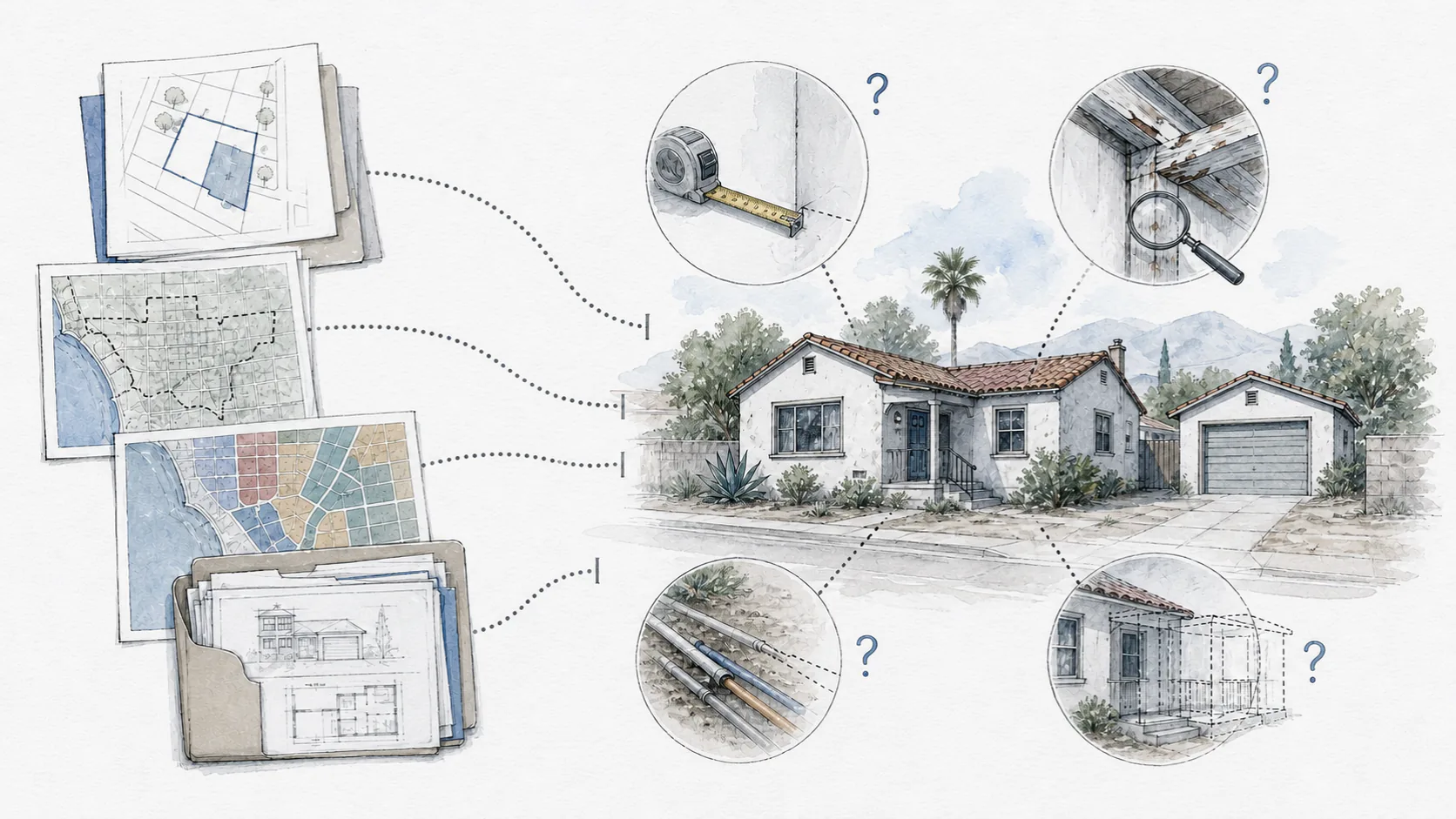
Start with the parcel, zoning, and permit records
Depending on what is available, official records can help you identify the parcel, the reviewing city or county, recorded building information, zoning, and past permit entries.
Save the source link and the date you found each item. That makes it easier to return to the original record when a question comes up.
- Address and assessor parcel number
- Recorded lot and building information
- City or county planning and building departments
- Zoning maps and related property information
- Available permit records and drawing references
A record is not a site inspection
A database cannot confirm today's dimensions, construction condition, utility capacity, or every change made to a building. An assessor map is not a boundary survey.
A permit entry is a lead to follow, not proof that everything now on the property was approved and built as shown. When it matters, look for the underlying documents and ask the reviewing agency what the record means.
Check conflicts instead of filling in the gaps
If a listing, assessor record, and old plan show different floor areas, keep those figures separate. Note where each came from rather than picking the one that looks most useful.
The same goes for missing records. Not finding a permit online does not, by itself, establish the status of the work. You may need another records source or help from the agency.
Use the research to decide what to check next
A good summary should make it easy to see what was found, what conflicts, and what still needs an answer. Some questions can be resolved with more records. Others need measurements, a survey, a site visit, or specialist input.
Studio Bluework's Design Feasibility Review combines available online property records and a preliminary review of one proposed idea. It does not replace a survey or guarantee permit approval.
Use property records to get organized and ask better questions. Don't ask a map or database to confirm a condition that needs to be checked on site.
Official sources and useful references
Links checked September 8, 2026. Confirm that the current guidance applies to your property when you use it.
Have a project in mind?
Share your idea and what is still unclear. We’ll help you find the right starting point.
This article provides general educational information. Property records, site conditions, required specialists, and city or county review may change the answer for a specific project.